
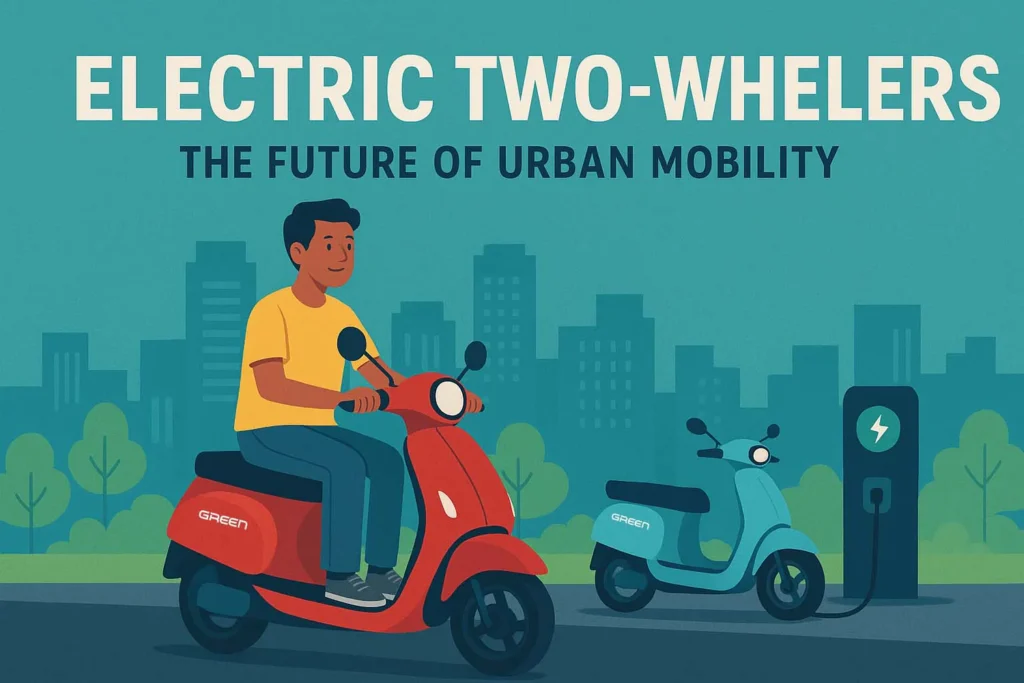
The global transportation landscape is undergoing a massive transformation, and at the forefront of this change are electric two-wheelers (E2Ws). Once considered a niche segment, electric scooters and motorcycles are now revolutionizing how people commute, especially in densely populated countries like India, China, and many Southeast Asian nations. With growing concerns around climate change, rising fuel costs, and the need for sustainable mobility solutions, electric two-wheelers are increasingly becoming the go-to choice for urban commuters.
In this article, we will explore the evolution, benefits, challenges, and future potential of electric two-wheelers, with a special focus on India’s rapidly growing electric mobility ecosystem.
The Rise of Electric Two-Wheelers
Two-wheelers have long been the backbone of personal mobility in countries like India. With over 200 million registered two-wheelers, India holds one of the largest markets in the world. Traditionally dominated by petrol-powered scooters and motorcycles, this segment is now witnessing a paradigm shift as electric two-wheelers step into the mainstream.
Globally, the demand for electric two-wheelers is being fueled by:
- Government incentives and subsidies promoting clean energy vehicles.
- Urbanization, which demands compact and efficient modes of transport.
- Technological advancements in batteries, charging systems, and connectivity.
- Rising fuel costs, which make electric alternatives more attractive.
According to industry reports, the global electric two-wheeler market is expected to grow at a CAGR of over 7–10% between 2024 and 2030, with Asia-Pacific leading the adoption.
Why Electric Two-Wheelers Are the Future
1. Eco-Friendly Mobility
One of the biggest advantages of electric two-wheelers is their zero tailpipe emissions. Conventional petrol two-wheelers emit harmful gases such as carbon monoxide, hydrocarbons, and nitrogen oxides, all of which contribute to air pollution and global warming. Electric scooters and bikes, on the other hand, run on batteries and produce no direct emissions, helping cities combat pollution and move toward carbon neutrality.
2. Cost Savings
Electric scooters offer significant savings compared to petrol-powered vehicles. For instance:
- Charging an electric two-wheeler typically costs on around 20 Paisa per km, providing a range of 60–120 km.
- In contrast, the same distance on a petrol scooter could cost 3-4 Rupees per km, depending on fuel prices.
- Electric two-wheelers also have fewer moving parts, reducing maintenance costs by up to 40–60%.
3. Government Incentives
In India, the FAME II (Faster Adoption and Manufacturing of Hybrid and Electric Vehicles) scheme offers subsidies for electric vehicle buyers, making E2Ws more affordable. State governments further provide road tax exemptions, registration fee waivers, and additional subsidies.
4. Smart and Connected Features
Modern electric two-wheelers are not just about mobility—they’re about smart mobility. Many models now come with:
- GPS tracking and navigation.
- Battery status monitoring.
- Anti-theft alerts.
- IoT-based remote diagnostics.
These features are highly appealing to the tech-savvy youth population.
5. Noise-Free Experience
Electric scooters and bikes are much quieter than their petrol counterparts. This reduces noise pollution in crowded cities, improving the overall quality of life.
Key Players in the Electric Two-Wheeler Market
The electric two-wheeler industry has seen both startups and established automobile giants enter the space, like us “GREEN EV“. Here are GREEN’s top-selling electric scooter models:
Challenges Facing Electric Two-Wheelers
Despite their growing popularity, electric two-wheelers still face certain challenges:
1. Battery and Charging Infrastructure
While charging at home is convenient, the lack of widespread public charging stations is a concern. Although governments and private players are rapidly setting up charging networks, scalability remains a challenge.
2. Range Anxiety
Potential buyers often worry about whether their scooter can cover enough distance on a single charge. Current offer ranges from 30 km to 150 km, which may not be sufficient for long-distance commuters.
3. Battery Recycling and Disposal
Lithium-ion batteries have a limited lifespan, and improper disposal can cause environmental damage. Developing efficient battery recycling systems is essential for the long-term sustainability of electric mobility.
4. Consumer Awareness
Many consumers are still unfamiliar with the benefits or have misconceptions regarding their performance, speed, or durability. Awareness campaigns and test-ride opportunities can help overcome this barrier.
Government Policies and Support
Government initiatives are playing a critical role in boosting adoption:
- FAME II Scheme – Provides demand incentives and support for charging infrastructure.
- State-Level Policies – Maharashtra, Delhi, Gujarat, and Tamil Nadu are offering state-level subsidies, tax exemptions, and incentives for EV buyers.
- EV Manufacturing Push – The Indian government’s PLI (Production Linked Incentive) scheme is encouraging local manufacturing of EVs and batteries.
- Battery Swapping Policy – Recently announced to reduce range anxiety and ensure quicker adoption of electric scooters.
Electric Two-Wheelers and the Indian Market
India is uniquely positioned for electric two-wheeler adoption:
- Short-Distance Commuting – Most urban commutes are under 30 km per day, which fits perfectly within the range of electric scooters.
- Two-Wheeler Dominance – With over 80% of vehicles sold in India being two-wheelers, electrification here can have a huge impact.
- Young Population – A tech-savvy, environmentally conscious youth population is driving demand.
- Rising Petrol Prices – Fuel price hikes make electric mobility an economically attractive choice.
Reports suggest that by 2030, electric two-wheelers could account for 40–50% of new two-wheeler sales in India, creating a massive opportunity for manufacturers, investors, and consumers alike.
The Role of Technology and Innovation
Technology is the biggest enabler in the electric two-wheeler revolution:
- Battery Innovations – From lithium-ion to solid-state batteries, technology is improving energy density, charging speed, and safety.
- Battery Swapping Models – Companies like GREEN and other Indian startups are pioneering swapping for quick energy replenishment.
Future of Electric Two-Wheelers
The future of E2Ws looks bright, with significant advancements expected in the coming years:
- Affordable Models – As battery prices fall, electric scooters will become even more cost-competitive.
- Better Ranges – Next-generation batteries could deliver ranges of 200–300 km on a single charge.
- Widespread Charging Infrastructure – Both public and private investments will ensure charging availability in urban and rural areas.
- Shared Mobility Integration – Electric scooters will dominate ride-sharing and last-mile delivery services.
- Sustainable Ecosystem – Battery recycling, green manufacturing, and renewable-powered charging will make E2Ws truly sustainable.